New Delhi | June 6,2026 | SKY LINK TIMES
RBI Considers Plastic Currency Notes in India:
The Reserve Bank of India (RBI) is considering a proposal to introduce polymer-based currency notes in the country, RBI Governor Sanjay Malhotra announced on Friday. The proposal is currently at a preliminary stage and is being examined by the central bank.
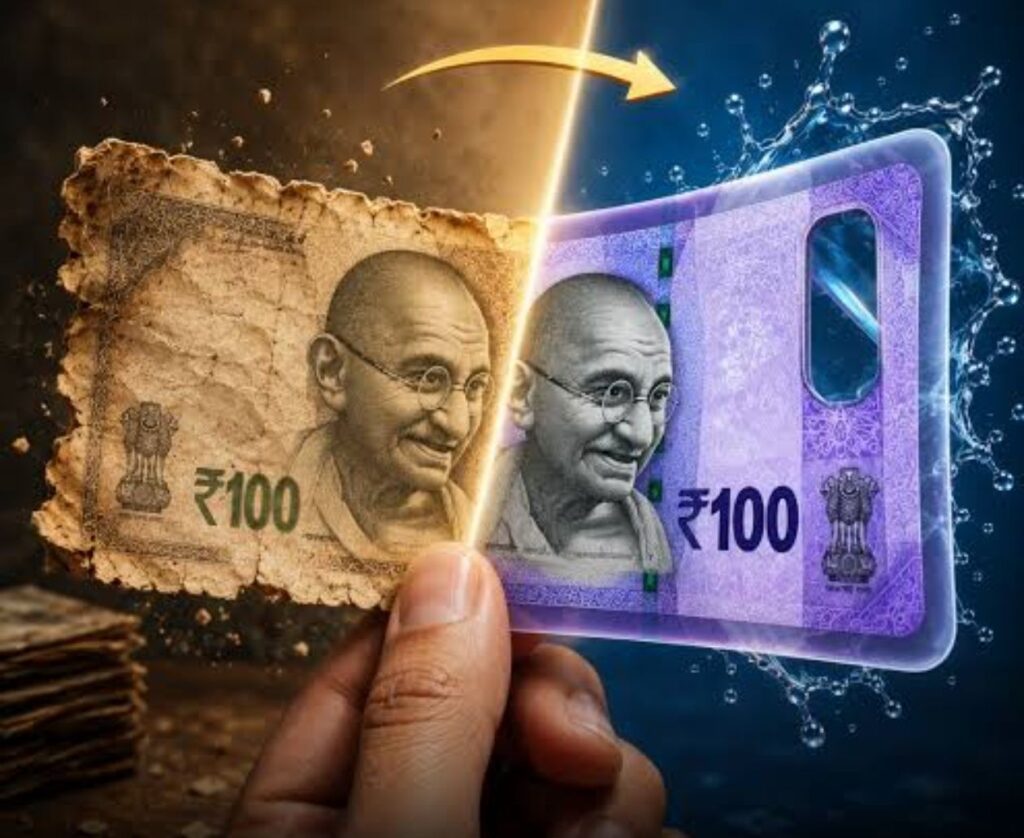
The move comes as cash circulation in the Indian economy continues to rise despite the rapid growth of digital payment systems. Polymer notes, commonly referred to as plastic currency notes, are considered more durable, secure, and environmentally sustainable than traditional paper-based banknotes.
Table of Contents
Proposal Under Preliminary Review
Speaking about the initiative, RBI Governor Sanjay Malhotra stated that the proposal is still in its early stages. No timeline has yet been announced for the introduction of polymer notes.
The development marks a revival of a plan that was first proposed nearly a decade ago. The RBI had earlier explored the possibility of introducing plastic currency notes to reduce wear and tear and improve the lifespan of banknotes in circulation.
Earlier Pilot Project
In February 2014, the Government of India informed Parliament that one billion polymer notes of Rs 10 denomination would be introduced as part of a field trial. The pilot project was planned across five cities selected for their geographical and climatic diversity: Kochi, Mysore, Jaipur, Shimla, and Bhubaneswar.
However, the initiative did not move forward as technological and operational challenges emerged during the planning process, leading authorities to put the project on hold.
Also Read:https://skylinktimes.in/india-to-launch-3-more-ftas-in-next-6-months/
Why Polymer Notes?
Polymer banknotes are already used in several countries, including Australia, Canada, the United Kingdom, and New Zealand. Compared to traditional paper notes, polymer notes offer several advantages:
- Longer lifespan and greater durability
- Better resistance to moisture and dirt
- Enhanced security features against counterfeiting
- Reduced replacement and printing costs over time
The RBI’s renewed interest in polymer notes is believed to be driven by the increasing cost of printing paper currency and the growing volume of damaged notes that require replacement.
What Happens Next?
As the proposal remains under consideration, further studies and consultations are expected before any final decision is taken. If approved, India could gradually transition to polymer currency notes through pilot projects before a nationwide rollout.
The move would represent one of the most significant changes to India’s currency system in recent years and could improve both the durability and security of banknotes used by millions of citizens every day.
For More Info Stay Tuned: https://skylinktimes.in