New Delhi | March 12,2026 | SKY LINK TIMES
IEA to Release 400 Million Barrels Oil Amid Disruption:
The International Energy Agency (IEA) has announced the release of 400 million barrels of oil from emergency reserves held by its 32 member countries to stabilize global energy markets amid the ongoing crisis in West Asia.
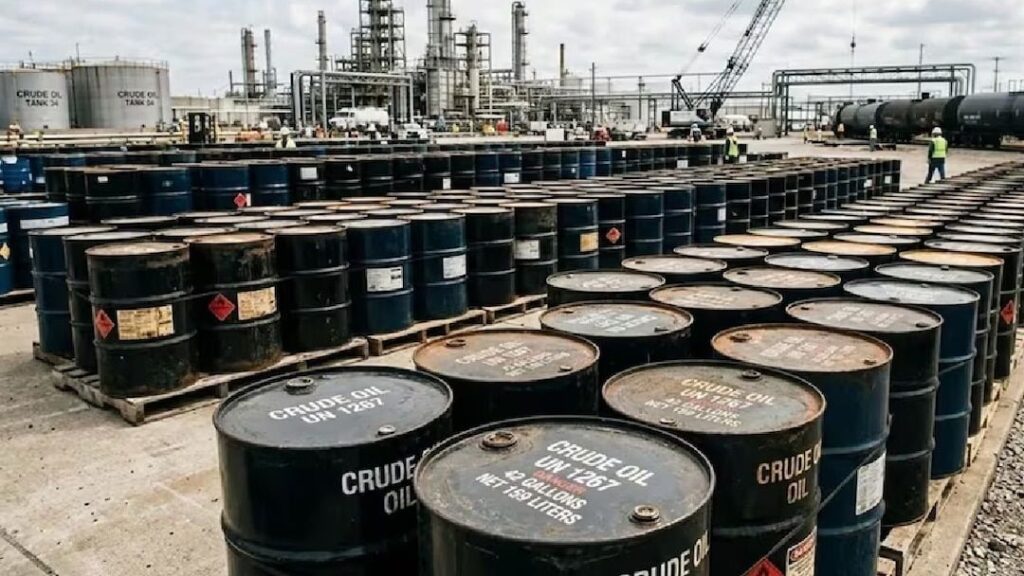
The decision comes as the conflict in the Middle East continues to disrupt major oil supply routes and create volatility in international oil markets. According to the agency, the emergency oil stocks will be released gradually based on the national circumstances of each participating country and may be supported by additional measures from some governments.
Table of Contents
Emergency Reserves to Stabilize Oil Markets
IEA member countries currently hold more than 1.2 billion barrels of emergency oil reserves, along with an additional 600 million barrels of industry stocks maintained under government obligations.
The coordinated release of 400 million barrels is expected to help offset supply disruptions and calm global markets facing severe uncertainty.
This move marks the sixth collective emergency action in the history of the IEA, which was established in 1974 to safeguard global energy security. Previous coordinated releases were undertaken in 1991, 2005, 2011, and twice in 2022 during major global crises.
Decision Taken After Emergency Meeting
The decision followed an extraordinary meeting of IEA member governments convened by Executive Director Fatih Birol to evaluate market conditions and assess possible responses to the rapidly evolving situation in the Middle East.
“The oil market challenges we are facing are unprecedented in scale,” Birol said in a statement. “I am very glad that IEA member countries have responded with an emergency collective action of unprecedented size.”
He emphasized that global cooperation is essential in managing supply disruptions.
“Oil markets are global, so the response to major disruptions needs to be global too. Energy security remains the founding mandate of the IEA,” he added.
Also Read:https://skylinktimes.in/podanur-dhanbad-amrit-bharat-express/
Strait of Hormuz Disruptions Raise Concerns
The current energy crisis has been intensified by disruptions to oil shipments through the Strait of Hormuz, one of the world’s most critical maritime oil transit routes.
The conflict in the Middle East, which began on February 28, has significantly reduced oil exports through the strait. According to the IEA, export volumes of crude oil and refined products have dropped to less than 10 percent of pre-conflict levels.
In 2025 alone, an average of 20 million barrels of oil and petroleum products per day passed through the Strait of Hormuz — accounting for roughly 25 percent of global seaborne oil trade.
With limited alternative routes available to bypass the strait, disruptions in the region pose a serious risk to global energy supplies.
Global Energy Security at Stake
Energy analysts believe the coordinated release of emergency reserves could help stabilize oil prices and reduce immediate supply pressure on global markets.
However, experts warn that the situation will largely depend on how long the regional conflict continues and whether normal shipping operations through the Strait of Hormuz can be restored.
The latest move by the IEA highlights the growing concern among global energy leaders about the vulnerability of international oil supply chains during geopolitical crises.
For More Info Stay Tuned: https://skylinktimes.in