New Delhi| November 6, 2025|Sky Link Times |
India Leads in Green Growth:
Union Minister Dr Jitendra Singh on Thursday said that India has emerged as a global torchbearer in linking economic progress with environmental sustainability, guided by Prime Minister Narendra Modi’s vision of achieving net-zero emissions by 2070 and promoting eco-conscious living through the LiFE (Lifestyle for Environment) movement.
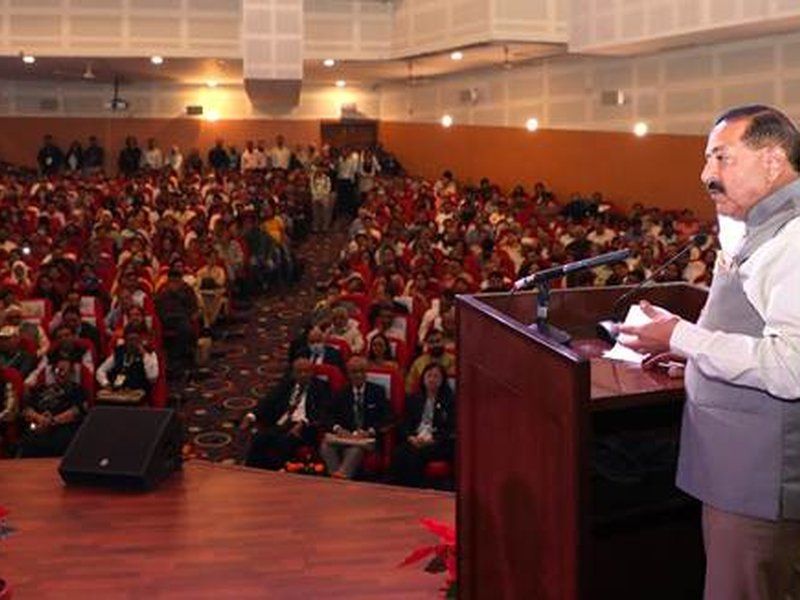
Delivering the inaugural address at the Asian Conference on Geography (ACG 2025) held at Jamia Millia Islamia, Dr Jitendra Singh said the event is timely as it addresses three interlinked global challenges — climate change, urbanisation, and sustainable resource management.
Table of Contents
Asia’s Climate Vulnerability: A Shared Challenge
The minister praised Jamia Millia Islamia and Vice Chancellor Prof. Mazhar Ali for hosting the first-ever edition of the prestigious ACG in India, bringing together scholars, policymakers, and international experts to deliberate on pressing environmental issues.
He noted that Asia is at the heart of global economic transformation yet contributes over 50% of the world’s greenhouse gas emissions. Referring to the IPCC Sixth Assessment Report, he warned that the region faces rising vulnerability to heatwaves, floods, and water scarcity if emissions continue unchecked.
“South Asia alone is home to over 750 million people exposed to severe climate hazards — from Himalayan glacier melt to coastal flooding and urban heat islands,” he said. He highlighted that Delhi, Dhaka, Bangkok, and Manila are projected to be among the most climate-vulnerable megacities by 2050.
Urbanisation and Human Negligence: A Double-Edged Sword
Dr Singh cautioned that while urbanisation signifies progress, unplanned expansion and poor environmental management have intensified natural disasters. Citing the 2014 Srinagar floods as an example, he said such events are “not purely natural but aggravated by human negligence and poor planning.”
He pointed to alarming statistics — 80% of wastewater in developing Asian nations is discharged untreated, and urban India produces over 55 million tonnes of solid waste annually, growing at nearly 5% per year.
Also Read:https://skylinktimes.in/india-finland-boost-ties-in-trade-ai-digital-tech/
From Waste to Wealth: A Vision for Circular Economy
Emphasizing the importance of waste-to-wealth technologies, Dr Singh said that the future lies in transforming waste into valuable resources through circular economy models.
He cited Dehradun’s used cooking oil recycling projects as examples where environmental sustainability and local income generation coexist successfully. “Such models show how green innovation can support both livelihoods and ecological goals,” he added.
Public Participation: The Key to Sustainable Change
Concluding his address, Dr Singh stressed that public participation is central to achieving sustainability.
> “Unless there is a social movement, no policy or seminar can yield lasting results,” he said, calling on citizens to adopt eco-friendly lifestyles in alignment with India’s LiFE mission.
For More Info Stay Tuned:https://skylinktimes.in