New Delhi | March 25,2026 | SKY LINK TIMES
Delhi Budget 2026:
In a major push toward technological advancement and governance reform, Rekha Gupta on Tuesday announced the creation of a new think tank — Delhi Institutional Think Tank — modeled on NITI Aayog, alongside upcoming drone and semiconductor policies in the Delhi Budget 2026–27.
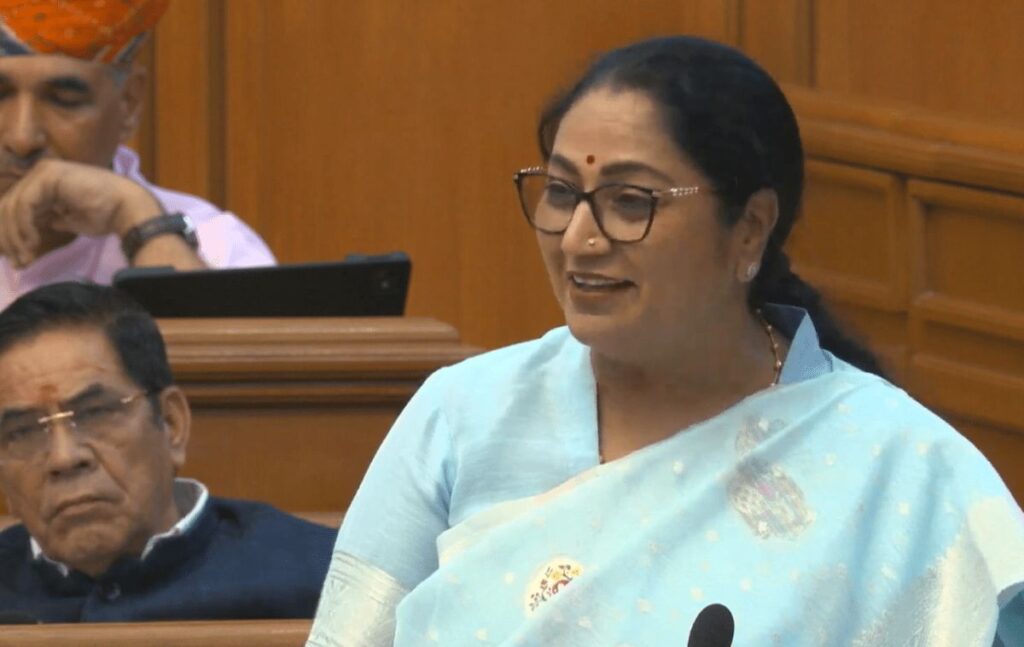
The initiative aims to position Delhi as a leading hub for advanced technology, innovation, and manufacturing.
Table of Contents
DITI & Tech Policies to Drive Innovation
The proposed DITI will function as a strategic advisory body to guide policy-making, similar to NITI Aayog at the national level. Alongside this, the government plans to introduce dedicated drone and semiconductor policies to attract investment and boost high-tech industries.
These measures are expected to strengthen Delhi’s role in emerging sectors such as electronics manufacturing, AI-driven services, and unmanned aerial technologies.
Governance Reforms & Digital Transformation
To improve public service delivery, the government will establish 13 mini secretariats across the city. Additionally, all properties will be assigned a unique Bhu-Aadhaar ID, and land records will be digitized through the NGDRS portal.
A fully paperless and faceless registration system is also in the pipeline, aimed at reducing corruption and improving efficiency. District magistrates will receive ₹59 crore under the district development fund to accelerate local projects.
Infrastructure Boost: Courts, Jail & Forensic Lab
The budget outlines significant investments in judicial and security infrastructure. New court complexes will be developed in areas like Shastri Park, Karkardooma, Rohini, and Rouse Avenue, along with a dedicated family court in Rohini.
A forensic science laboratory will be built in Sheikh Sarai, while a high-security jail in Narela is planned to ease overcrowding in existing facilities.
MSME, Tourism & Creative Economy Push
To strengthen the economy, ₹48 crore has been allocated for MSME facility centres, while ₹10 crore will support a new warehousing policy. Under the RAMP scheme, 32,000 MSMEs will be trained, and 15,000 businesses will be onboarded onto digital platforms like Government e-Marketplace and Open Network for Digital Commerce.
Tourism allocation has jumped significantly to ₹412 crore, with plans including a Delhi International Film Festival, a tourism master plan, and redevelopment of Town Hall into a global heritage centre.
Also Read:https://skylinktimes.in/govt-launches-ai-skilling-drive/
Green Budget & Pollution Control Measures
A key highlight is the ₹22,236 crore Green Budget, accounting for over 21% of total expenditure. Environmental funding has increased to ₹822 crore, including a ₹300 crore pollution control plan featuring anti-smog guns and mechanized cleaning.
The government will also collaborate with the World Bank for advanced environmental solutions. Waste processing capacity will be doubled, and waste-to-energy plants expanded across multiple sites.
Additionally, a carbon credit monetisation scheme and expansion of green spaces aim to make Delhi cleaner and more sustainable.
Vision for a Global Capital
Calling the budget “historic,” CM Rekha Gupta emphasized that these initiatives will transform Delhi into a modern, clean, safe, and globally competitive capital.
With a strong focus on technology, sustainability, and governance reforms, Delhi’s 2026–27 budget signals a long-term vision for economic growth and urban transformation.
For More Info Stay Tuned: https://skylinktimes.in