Kathmandu | May 22,2026 | SKY LINK TIMES
Nepal Requests UN to Delay LDC Graduation:
Nepal has formally requested the United Nations to defer its scheduled graduation from the Least Developed Country (LDC) category until November 2030, citing mounting economic challenges, global uncertainties, and concerns over the country’s preparedness for the transition.
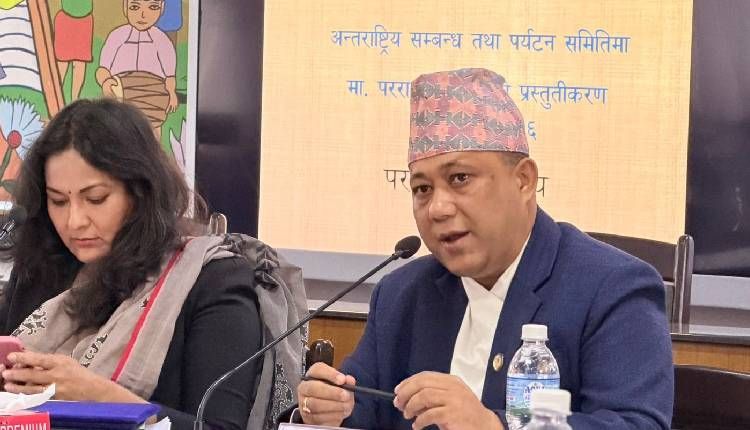
Nepal was originally due to graduate from the LDC category in November 2026, a milestone that would mark the country’s progress in human development and economic resilience. However, as the deadline approaches, policymakers and private sector representatives have raised concerns over the possible economic consequences of losing the special trade benefits currently available to LDC nations.
Table of Contents
Nepal Sends Formal Request to UN
Speaking at a regular press briefing, Foreign Ministry spokesperson Lok Bahadur Poudel Chhetri confirmed that Foreign Minister Sishir Khanal had sent a formal request to the Chair of the UN Committee for Development Policy (CDP) on May 13, seeking a postponement of Nepal’s graduation date until November 2030.
According to the ministry, the request is based on five major concerns related to Nepal’s economic stability and preparedness for the transition.
Economic Challenges and Global Uncertainty
Nepal cited the impact of regional conflicts in West Asia and disruptions in global supply chains as key reasons for seeking the delay. The government said these developments have negatively affected remittance inflows, trade, tourism, and overall economic stability.
Officials referred to the World Bank’s projection that Nepal’s economy would grow by only 2.3 per cent during the current fiscal year 2025/26, which ends in mid-July, reflecting a difficult economic environment.
The government also stressed that Nepal has yet to fully recover from the effects of the Covid-19 pandemic. Ongoing geopolitical tensions and the increasing impact of climate change have further complicated recovery efforts.
Fear of Losing Trade Benefits
One of Nepal’s biggest concerns is the anticipated loss of duty-free and quota-free market access currently available under the LDC framework, especially in developed countries.
According to the Foreign Ministry, Nepal’s manufacturing and processing sectors remain vulnerable and could face major setbacks after graduation.
“Nepal’s manufacturing and processing sectors remain vulnerable and could face significant setbacks, with potential employment losses estimated at up to 35 per cent due to the loss of duty-free and quota-free market access,” spokesperson Chhetri said.
The government also noted that implementation of Nepal’s Smooth Transition Strategy — designed to prepare the country for graduation — has faced delays, affecting overall preparedness.
West Asia Conflict Affecting Nepal’s Economy
Nepal further pointed to the economic repercussions of ongoing tensions in West Asia, particularly involving the United States and Iran. Officials said these tensions have affected remittance flows from Nepali migrant workers while also contributing to rising food, fertilizer, and energy prices.
The government warned that these developments have negatively impacted tourism and the broader economy.
Nepal Joins Bangladesh in Seeking Delay
Nepal is now the second country after Bangladesh to seek a postponement of its LDC graduation date. Bangladesh formally requested the UN body in February to delay its graduation by three years.
At present, Bangladesh, Lao PDR, and Nepal are scheduled to graduate from the LDC category in November 2026. The Solomon Islands is set to graduate in 2027, followed by Cambodia and Senegal in 2029.
Also Read:https://skylinktimes.in/pm-modi-swedish-pm-celebrate-tagores-legacy/
How UN Determines LDC Graduation
The United Nations determines LDC graduation based on three criteria:
- Gross National Income (GNI) per capita
- Human Assets Index (HAI)
- Economic and Environmental Vulnerability Index (EVI)
A country may graduate by meeting at least two of the three criteria in two consecutive triennial reviews or by achieving a per capita income more than three times the graduation threshold.
Under the UN’s 2024 Triennial Review criteria, a country must have a GNI per capita of at least USD 1,306, an HAI score of 66 or above, and an EVI score of 32 or below to qualify for graduation consideration.
Nepal has long met the HAI and EVI benchmarks and has now also crossed the GNI threshold. According to Nepal’s National Statistics Office, the country’s per capita income for fiscal year 2025/26 is projected to remain unchanged at USD 1,535.
Nepal’s Long Road Toward Graduation
Nepal first met two of the three UN criteria for LDC graduation in 2018 by fulfilling the benchmarks related to human assets and economic and environmental vulnerability while falling short of the income threshold.
Following the devastating 2015 earthquakes, Nepal opted to defer graduation to avoid the risk of economic reversal.
In 2021, the UN Committee for Development Policy recommended Nepal for graduation and granted the country a five-year preparatory period to reduce the effects of the Covid-19 pandemic and support a smoother transition.
According to United Nations records, eight countries had graduated from the LDC category by the end of 2025. These include Botswana, Cabo Verde, Maldives, Samoa, Equatorial Guinea, Vanuatu, Bhutan, and Sao Tomé and Príncipe.
For More Info Stay Tuned: https://skylinktimes.in