New Delhi / Mumbai | Dec 30,2025 | SKY LINK TIMES
NTPC Complete India’s First CO₂ Storage Well:
In a major milestone for India’s climate action and energy transition, the Indian Institute of Technology (IIT) Bombay and NTPC Ltd have successfully completed the drilling of India’s first well dedicated to testing geological carbon dioxide (CO₂) storage, the institute announced on Monday.
The project aims to assess the feasibility of storing CO₂ deep underground in sedimentary formations such as coal seams and sandstone, a critical component of Carbon Capture, Utilisation and Storage (CCUS) technologies.
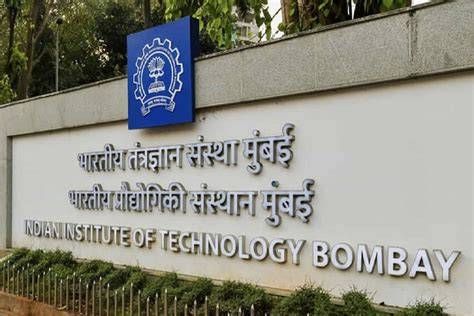
Table of Contents
Landmark Project Under NITI Aayog’s Aegis
The collaboration was launched in November 2022 under the aegis of NITI Aayog, bringing together NETRA, NTPC’s research and development arm, and the Department of Earth Sciences, IIT Bombay.
As part of the initiative, the partners developed India’s first geological storage atlas focused on coalbed methane-rich coalfields. The atlas provides layer-by-layer simulation results, supported by experimentally validated data, to quantify geological CO₂ storage potential across four major coalfields.
Drilling Achieved at 1,200 Metres Depth
India’s first dedicated CO₂ storage well reached a depth of 1,200 metres in September, with drilling operations completed on November 15 at Pakri Barwadih, near an active coal mining area in Hazaribagh district, Jharkhand.
Significantly, a second CO₂ storage well drilling was initiated on December 21, further strengthening the project’s field-scale implementation. According to IIT Bombay, both CO₂ injection experiments and plume monitoring will be carried out using these wells.
Supporting India’s Net-Zero and Panchamrit Goals
Dr. V.K. Saraswat, Member, NITI Aayog, described the achievement as crucial for India’s long-term climate commitments.
“As India stands at the cusp of honouring its net-zero commitments in line with the ‘Panchamrit’ climate goals, accelerating indigenous science and technology outcomes for commercialisation of CCUS technologies will be vital,” Saraswat said.
He also stressed the importance of robust subsurface characterisation, conservative injection pressure limits, strong well design, and continuous seismic and pressure monitoring.
Also Read:https://skylinktimes.in/india-poised-to-lead-ai-driven-tech-future-by-2026/
High CO₂ Storage Potential Identified
Preliminary studies under the project indicate high geological CO₂ storage potential in the North Karanpura coalfield. The Pakri-Barwadih block alone could potentially store up to 15.5 million tonnes (Mt) of CO₂ over a 10-year injection period, according to early assessments.
The project marks a decisive shift from laboratory research to real-world field deployment, providing feasibility studies, risk assessments, and groundwork for full-scale commercial CCS development, including storage complex analysis and development planning.
Building on Past IIT Bombay–NTPC Collaboration
This milestone builds on earlier collaboration between IIT Bombay and NTPC. In 2017, the two institutions jointly developed India’s first CO₂ capture and utilisation facility in the power sector, leading to the Vindhyachal CCU plant, which captures 20 tonnes of CO₂ per day and converts it into fuel-grade methane.
NTPC Chairman and Managing Director Gurdeep Singh termed the new achievement “an important step towards decarbonisation,” while Prof. Shireesh Kedare, Director, IIT Bombay, highlighted the role of translational R&D in shaping India’s clean energy roadmap.
India’s CCUS journey is now being pursued in mission mode, with the Ministry of Power as the nodal agency, supported by inter-ministerial coordination to scale up carbon management technologies across hard-to-abate sectors.
For More Info Stay Tuned: https://skylinktimes.in