New Delhi, December 6,2025 | SKY LINK TIMES
PM Surya Ghar Yojana:
India’s ambitious renewable energy initiative, the PM Surya Ghar Yojana, has made remarkable progress with 24 lakh households installing rooftop solar systems by December 2025, the government said on Saturday. The scheme stands as a crucial pillar in India’s transition toward clean energy and net-zero emissions.
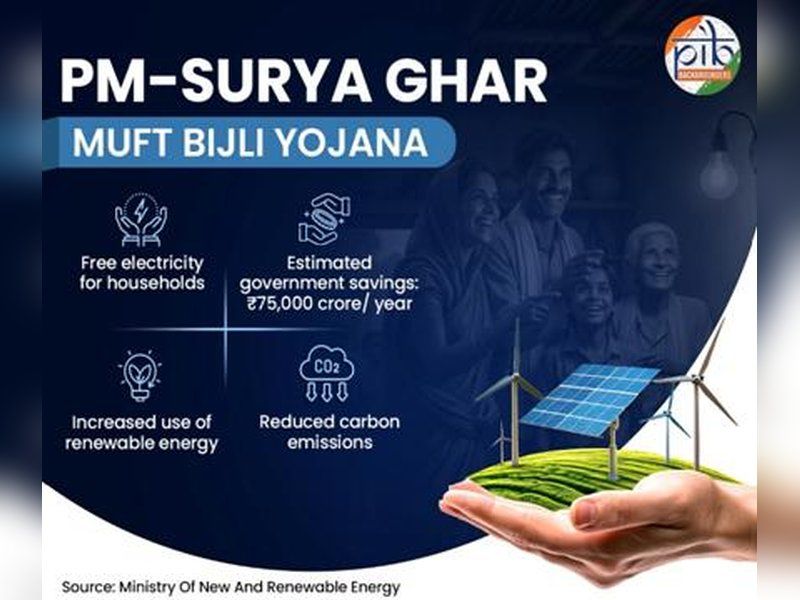
Table of Contents
Mission Launched to Power 1 Crore Homes
Launched on February 13, 2024, the scheme PM Surya Ghar Yojana aims to provide rooftop solar systems to one crore households, offering up to 300 units of free electricity every month. With a total financial outlay of ₹75,021 crore, the programme offers subsidies and promotes widespread renewable energy adoption.
According to the official statement, ₹13,464.6 crore subsidy has already been released, ensuring strong progress toward national goals.
7 GW Clean Energy Capacity Installed
The government reported that as of December 2025, 23.9 lakh households have installed rooftop solar systems, contributing to 7 GW of clean electricity.
Officials noted that the initiative enables families to produce their own power, reduce electricity costs, and support national sustainability objectives.
India’s Solar Sector Growing at Historic Pace
The statement highlighted India’s rapid renewable energy expansion, stating that solar capacity has increased from just 3 GW in 2014 to 129.92 GW by October 2025, representing more than a 40-fold growth in a decade. Solar now contributes the largest share of renewable energy capacity, outpacing wind, hydro, and biomass.
The current solar portfolio includes:
98.72 GW – Ground-mounted solar plants
22.42 GW – Grid-connected rooftop systems
3.32 GW – Hybrid solar projects
5.45 GW – Off-grid solar systems
Also Read:https://skylinktimes.in/amit-shah-unveils-swadeshotsav-2025-in-ahmedabad/
Boosted by National Solar Mission & PLI Scheme
The government attributes this rapid growth to policy support including:
National Solar Mission (NSM) launched in 2010
Production-Linked Incentive (PLI) for solar PV manufacturing
PM-KUSUM scheme for farmers
International collaborations such as the International Solar Alliance (ISA) and One Sun One World One Grid (OSOWOG) are also strengthening global renewable energy partnerships.
Targeting 500 GW Non-Fossil Fuel Capacity by 2030
The statement reaffirmed India’s commitment to achieving 500 GW of non-fossil fuel electricity capacity by 2030 as pledged under the Paris Agreement and reiterated at COP summits.
For More Info Stay Tuned: https://skylinktimes.in