New Delhi | Nov 26, 2025 | Sky Link Times |
India’s rapidly evolving biotechnology sector is witnessing a significant transformation driven by the increasing popularity of the Entrepreneur-in-Residence (EIR) Programme, Union Minister of State for Science & Technology, Dr. Jitendra Singh, said on Wednesday.
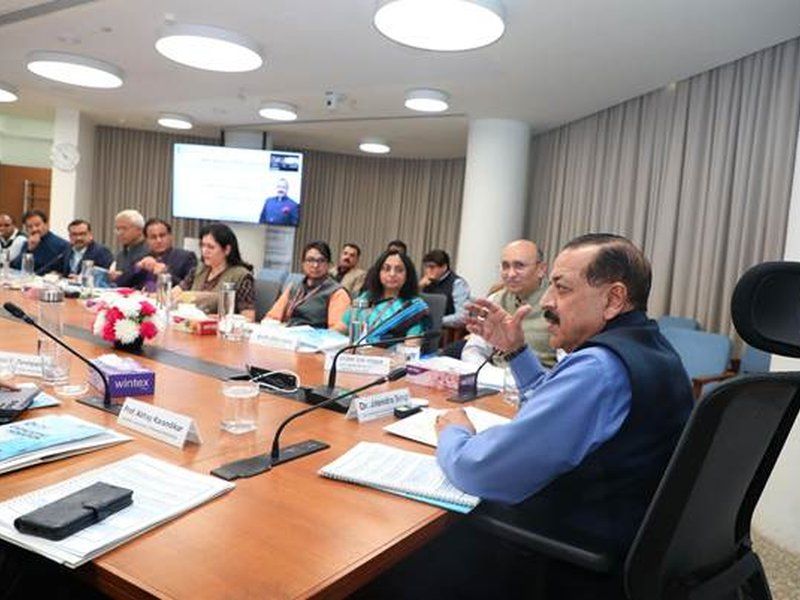
Speaking at the third Annual General Meeting (AGM) of the Biotechnology Research and Innovation Council (BRIC), the minister highlighted how the initiative has become a catalyst for nurturing a new generation of science-driven entrepreneurs.
Table of Contents
EIR Programme Fuelling Scientist-Entrepreneur Growth
Dr. Singh emphasized that the EIR Programme is helping bridge the gap between laboratory research and market-ready innovation. He noted that the initiative has received strong backing from private sector partners and venture capital firms, significantly accelerating technology translation.
According to the minister, the programme encourages researchers to adopt a “discover-to-deliver” mindset — guiding them to convert scientific ideas into deployable biotech innovations that contribute meaningfully to India’s growth story.
BRIC’s Collaborative Model Driving Reform
Calling BRIC one of India’s most impactful scientific reforms, Dr. Singh said the council’s creation marked the first successful consolidation of multiple research institutes under a unified leadership framework.
He noted that BRIC’s collaborative model has inspired similar structural reforms across other scientific ministries, enabling better coordination, resource sharing, and innovation management.
Push for Interdisciplinary and Cross-Sector Partnerships
The minister urged BRIC to expand its training and research ecosystem by fostering deeper interdisciplinary and cross-sectoral collaborations. He recommended integrating intra-science, extra-science, and external industry partnerships to deliver holistic and scalable innovations.
Highlighting ongoing research projects in collaboration with premier medical institutions such as Christian Medical College and Apollo Hospitals, Dr. Singh said such partnerships are essential for effective biotech translation and real-world deployment.
Also Read:https://skylinktimes.in/red-fort-blast-gets-10-day-custody-of-accused/
AI Integration Strengthening India’s Biosciences Future
Dr. Singh also stressed the growing importance of Artificial Intelligence (AI) in biological research. He stated that India is aligning with global best practices by incorporating AI-driven tools in biosciences, which is poised to enhance precision research, diagnostics, and drug discovery.
He encouraged research institutions to produce more accessible scientific content and strengthen digital communication channels to improve awareness, collaboration, and knowledge-sharing across the biotech ecosystem.
Conclusion
With the EIR Programme emerging as a powerful innovation engine, India’s biotechnology landscape is moving toward a more entrepreneurial, collaborative, and technology-driven future. Dr. Singh said the government remains committed to supporting innovators and accelerating India’s journey toward becoming a global biotech leader.
For More Info Stay Tuned:https://skylinktimes.in