Kathmandu | March 13,2026 | SKY LINK TIMES
Nepal Allowed to Import 350 MW Power from India:
Nepal will now be able to import up to 350 megawatts (MW) of electricity from neighbouring Indian states, following a new agreement reached between officials from both countries. The decision was finalised during a two-day meeting of a bilateral mechanism held in Pokhara, western Nepal, which concluded on Friday.
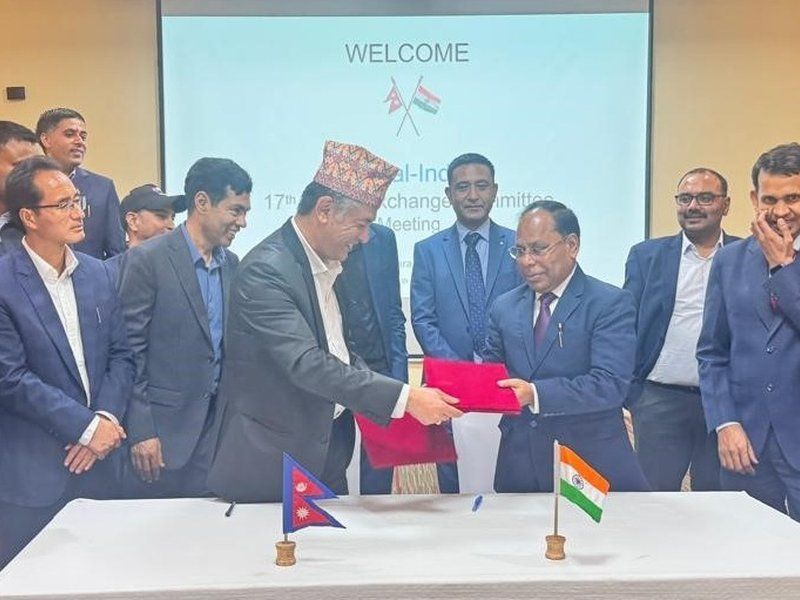
The agreement is expected to help Nepal manage electricity demand during the winter and dry months, when hydropower production in the Himalayan nation declines significantly.
Table of Contents
Bilateral Meeting Finalises Power Import Mechanism
The understanding was reached during the meeting of the Power Exchange Committee (PEC), a bilateral mechanism involving the Nepal Electricity Authority and India’s Central Electricity Authority.
The new arrangement allows Nepal to purchase electricity from Indian border states such as Bihar, Uttar Pradesh and Uttarakhand when needed.
Under the agreement, both sides also agreed to increase the electricity purchase rate by 1.5 per cent, enabling Nepal to continue importing power through the committee mechanism during the winter months.
Revised Electricity Purchase Rates
According to a statement issued by the Nepal Electricity Authority, the revised electricity tariffs for imports from India have been fixed as follows:
• NPR 8.22 per unit for electricity delivered through 132 kV transmission lines
• NPR 8.91 per unit through 33 kV lines
• NPR 9.55 per unit through 11 kV lines
These rates will remain valid for one year.
Officials believe the new arrangement will ensure stable electricity supply during the dry months of March and April, when energy demand in Nepal typically rises.
Also Read:https://skylinktimes.in/iea-to-release-400-million-barrels-oil/
Nepal Usually Exports Power During Wet Season
Despite the need for imports in winter, Nepal actually exports electricity to India during the monsoon and wet season. This is because many of its hydropower projects are run-of-the-river plants, which generate higher electricity output when water levels increase.
However, during winter months, water flow decreases and electricity generation drops below installed capacity, forcing Nepal to rely on imports from India.
Currently, Nepal imports around 12,000–14,000 megawatt-hours of electricity daily from India. This figure could increase further as energy demand rises in the coming weeks.
Strategic Importance of the Agreement
The negotiations were led by Hitendra Dev Shakya, Managing Director of the Nepal Electricity Authority, and Vijay Kumar Singh, Board Member (Power System) of India’s Central Electricity Authority.
During discussions, the Indian side had initially proposed a 5.5 per cent increase in electricity prices, citing higher domestic production costs. However, Nepali officials pushed for a smaller increase, arguing that electricity prices in India’s open power market had recently declined.
The final agreement on a 1.5 per cent increase reflects a compromise between the two sides.
The Nepal Electricity Authority also noted that global geopolitical tensions, including conflicts in West Asia involving Israel and Iran, could potentially affect regional energy markets. In that context, the timely agreement with India is expected to play an important role in maintaining Nepal’s power supply stability.
For More Info Stay Tuned: https://skylinktimes.in