New Delhi | January 13,2026 | SKY LINK TIMES
ISRO PSLV-C62 Launches EOS-N1:
The Indian Space Research Organisation (ISRO) successfully began its space launch calendar for 2026 with the liftoff of PSLV-C62, carrying the EOS-N1 (Anwesha) Earth Observation Satellite, from Sriharikota on Monday morning. The mission strengthens India’s capabilities in remote sensing, environmental monitoring, and commercial space services.
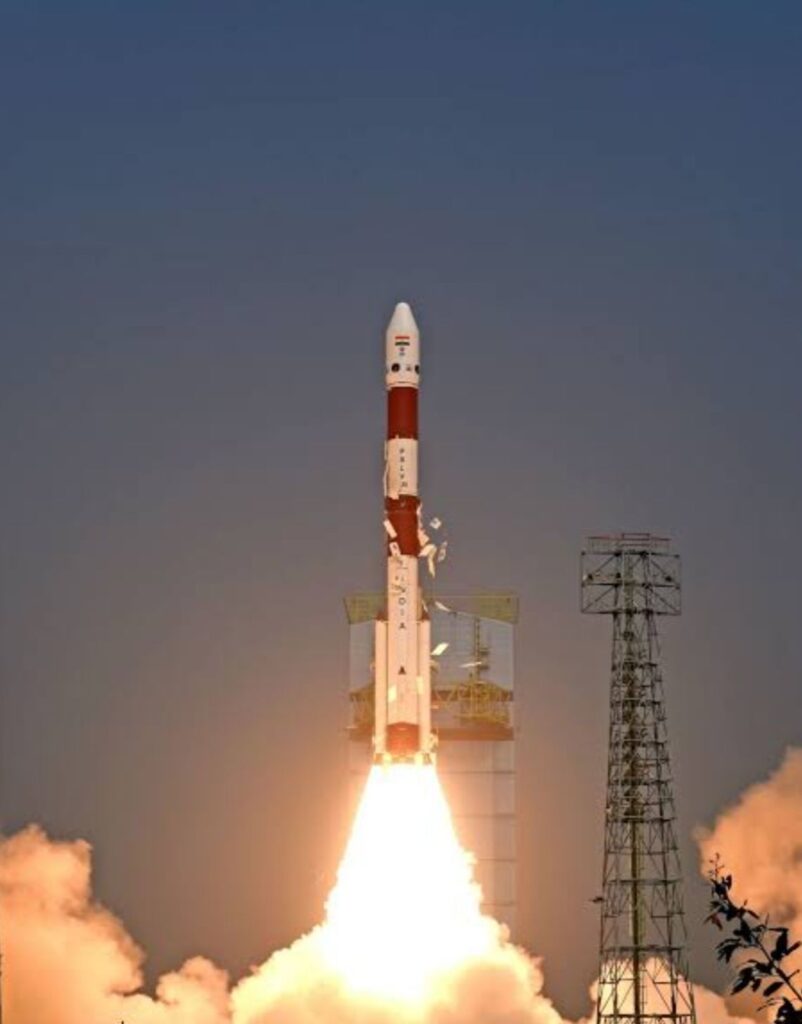
The launch took place at 10:17 am IST from the First Launch Pad (FLP) at the Satish Dhawan Space Centre (SDSC-SHAR), marking the 64th flight of the Polar Satellite Launch Vehicle (PSLV).
Table of Contents
EOS-N1 Mission: Enhancing Earth Observation Capabilities
The EOS-N1 satellite, also known as Anwesha, has been designed to support a wide range of applications including agriculture assessment, urban mapping, infrastructure planning, and environmental monitoring.
According to ISRO, the satellite was successfully injected into a Sun-Synchronous Orbit (SSO), allowing it to image the same region of Earth under consistent lighting conditions—crucial for high-accuracy data analysis.
ISRO confirmed the successful liftoff through a post on social media platform X, stating:
“Liftoff! PSLV-C62 launches the EOS-N1 Mission from SDSC-SHAR, Sriharikota.”
15 Co-Passenger Satellites and International Technology Demonstration
In addition to EOS-N1, the PSLV-C62 mission carried 15 co-passenger satellites, underscoring India’s growing role as a reliable global launch service provider.
A key highlight of the mission was the Kestrel Initial Technology Demonstrator (KID), developed by a Spanish startup. The KID capsule is a small-scale re-entry vehicle prototype, aimed at testing atmospheric re-entry technologies.
ISRO stated that the KID capsule would be the final payload to separate, following which it is planned to re-enter Earth’s atmosphere and splash down in the South Pacific Ocean.
Commercial Launch by NSIL
The PSLV-C62/EOS-N1 mission is the ninth dedicated commercial mission undertaken by NewSpace India Limited (NSIL), ISRO’s commercial arm. This reflects India’s expanding footprint in the global space launch market.
The mission used the PSLV-DL variant, featuring two solid strap-on motors, making it the fifth launch with this configuration.
Also Read:https://skylinktimes.in/iit-guwahati-develops-sunlight-catalyst/
PSLV’s Legacy and Recent Challenges
The PSLV has completed 63 successful flights, including landmark missions such as Chandrayaan-1, Mars Orbiter Mission (Mangalyaan), Aditya-L1, and AstroSat. In 2017, PSLV made global headlines by launching 104 satellites in a single mission, a world record.
ISRO’s previous mission, PSLV-C61 in May 2025, faced a setback due to a third-stage anomaly, preventing EOS-09 from reaching its intended orbit. The successful PSLV-C62 launch therefore reinforces confidence in ISRO’s technical robustness.
A Strong Start to 2026
With PSLV-C62, ISRO has delivered a confident and technologically diverse start to 2026, reaffirming India’s position as a dependable spacefaring nation with growing commercial and international partnerships.
For More Info Stay Tuned: https://skylinktimes.in