New Delhi, November 28, 2026: The Union Cabinet has approved a revised legislative package proposing a 50% increase in Lok Sabha seats across every state and Union Territory, ahead of the special sitting of Parliament scheduled to begin on November 30. The proposal is also linked to the implementation of 33% reservation for women in the Lok Sabha and state legislative assemblies.
50% Lok Sabha Seat Increase Proposed Ahead of November 30 Parliament Session
Union Cabinet decision, taken at a Cabinet meeting chaired by Prime Minister Narendra Modi on November 27, marks a renewed attempt by the Centre to move forward with delimitation and women’s reservation after an earlier constitutional amendment proposal failed to secure the required support in the Lok Sabha in April.
The Union Cabinet has approved major amendments to the Delimitation Bill, proposing a 50% increase in Lok Sabha seats. The Union Cabinet’s decision has opened a new chapter in the national debate over parliamentary representation and women’s reservation.
Union Cabinet revised proposal could significantly expand India’s parliamentary representation and influence the structure of legislative assemblies across the country.
Union Cabinet: What Does the New Delimitation Proposal Say?
Under the proposed framework, the number of Lok Sabha seats allocated to every state and Union Territory would increase by 50% during the first delimitation exercise carried out under the new arrangement. The maximum strength of the Lok Sabha is proposed to rise to 850 members.
The proposal also seeks to increase the strength of state legislative assemblies by 50%, subject to a maximum limit of 650 seats.
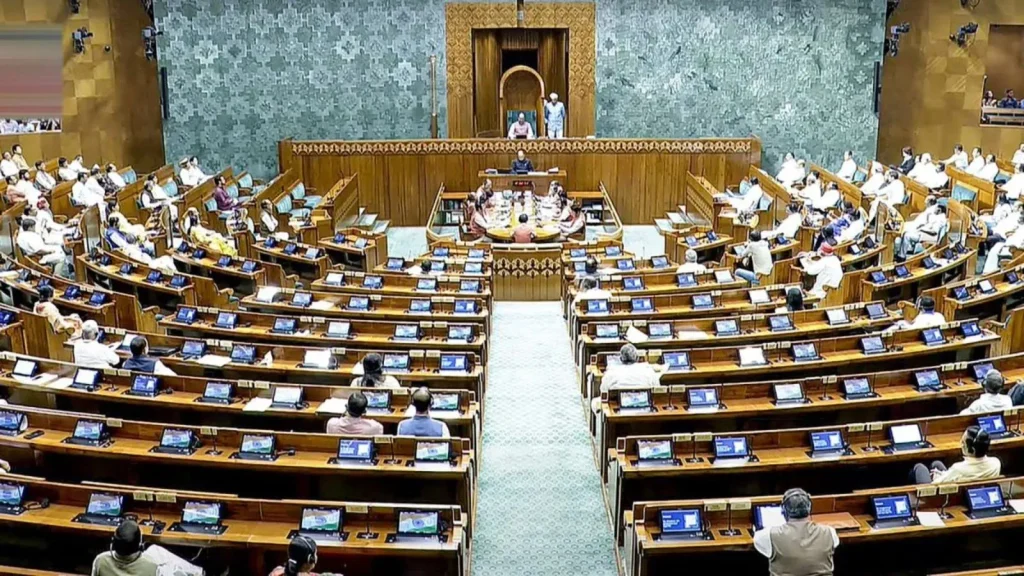
The proposed Delimitation Bill could reshape India’s parliamentary representation by increasing Lok Sabha seats by 50%. The Delimitation Bill has also sparked debate over state representation, federal balance and the implementation of 33% women’s reservation ahead of the November 30 special Parliament session.
A major feature of the revised plan is that the existing relative distribution of parliamentary seats among states would remain protected until 2051. This is intended to address concerns that states with different population growth rates could experience changes in their relative representation during delimitation.
According to reports on the proposed legislation, constituency boundaries would be redrawn using the 2011 Census figures, while the existing inter-state allocation ratio based on the 1971 Census would be maintained during the specified period.
These changes are intended to provide a framework for expanding representation without immediately changing the relative share of parliamentary seats held by individual states.
Women’s Reservation Linked to Delimitation
The legislative package is also connected to the implementation of 33% reservation for women in Parliament and state assemblies.
The Constitution (132nd Amendment) Bill, 2026, seeks to provide the constitutional framework for implementing women’s reservation through the delimitation process. The government has indicated that the revised arrangement could allow the reservation to be implemented ahead of the 2029 Lok Sabha elections, subject to Parliament passing the legislation and the necessary subsequent steps.
The proposed reservation would represent a major change in the composition of elected legislative bodies. However, its implementation depends on the passage of the relevant bills and completion of the required delimitation exercise.
Why Is the November 30 Parliament Session Important?
The special sitting of Parliament is expected to become an important test for the government’s revised proposal.
The Lok Sabha is scheduled to meet from November 30, while the Rajya Sabha is expected to convene on December 2. The government plans to bring the revised legislation before Parliament during the special sitting.
A constitutional amendment requires a special majority in both Houses of Parliament. It must also receive ratification from at least half of the state legislatures where constitutionally required.
The earlier constitutional amendment proposal failed to obtain the necessary two-thirds support in the Lok Sabha in April. The government has now revised its approach, including a uniform 50% increase in seats, in an effort to address concerns raised by several political parties.
Political Parties Differ Over the Proposal
The revised delimitation plan has generated fresh political discussions among ruling and opposition parties.
The DMK, which had raised concerns about the possible impact of delimitation on Tamil Nadu’s parliamentary representation, has indicated that protecting the state’s existing share of seats is a key condition. Party leader M.K. Stalin has publicly stressed that Tamil Nadu’s relative representation should not decline.
The Congress and other opposition parties have also raised questions about the proposed exercise, including its possible impact on federal representation and the need for wider consultation. Opposition leaders are expected to discuss a coordinated response before the special sitting.
The debate is not limited to the number of seats. It also concerns how representation will be distributed, how constituency boundaries will be determined and whether the proposed process adequately protects the interests of states with different demographic trends.
What Happens Next?
The immediate focus will be on the discussions and voting in Parliament. If the constitutional amendment receives the required majority and the necessary state ratifications, the government can proceed with the legislative and administrative steps needed for delimitation.
For voters, political parties and state governments, the proposed changes could have long-term consequences. A larger Lok Sabha would mean more parliamentary constituencies, while the linked women’s reservation framework could change the representation of women in elected bodies.
The special Parliament sitting beginning November 30 will therefore be closely watched across the country. The outcome will determine whether the government’s revised delimitation and women’s reservation proposals can move to the next stage of the legislative process.
The proposed 50% increase in Lok Sabha seats is not yet law. Its implementation depends on Parliament’s approval and completion of the constitutional requirements.
For More info please stay tuned to : Sky Link Times – Latest News from Tripura & Northeast India