New Delhi | April 21,2026 | SKY LINK TIMES
India Can Unlock Rs 78500 Crore from Textile Waste:
India has the potential to unlock nearly ₹78,500 crore (around $9.4 billion) annually from its textile waste by strengthening recycling systems and infrastructure, according to a joint report by and the .The report highlights that India generates approximately 7.2 million tonnes of textile waste every year. However, a large portion of this waste remains underutilised due to inefficiencies in collection, sorting, and recycling processes.
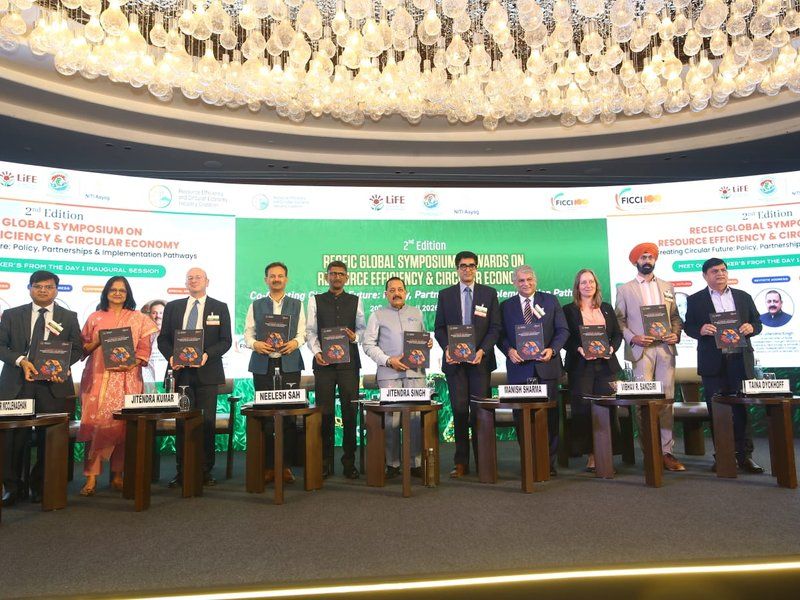
The report highlights that India generates approximately 7.2 million tonnes of textile waste every year. However, a large portion of this waste remains underutilised due to inefficiencies in collection, sorting, and recycling processes.
Table of Contents
Huge Untapped Economic Potential
The study estimates that nearly 85 per cent of the unrealised value lies in reuse pathways, which are currently underdeveloped. Weak systems and fragmented supply chains prevent effective recovery and reuse of textile materials.
It further notes that about 45 per cent of post-consumer textile waste does not enter recovery channels and is instead sent to landfills or incinerated, leading to both economic loss and environmental concerns.
Key Challenges in the System
One of the biggest bottlenecks identified is the lack of efficient sorting systems. Over 95 per cent of textile waste sorting in India is done manually, with minimal technological support and no standardised grading framework.
The absence of proper traceability systems and limited adoption of advanced recycling technologies further restrict the sector’s growth. Mechanical recycling dominates the current ecosystem, while chemical recycling—which can handle complex blended fabrics—remains underdeveloped.
Also Read : https://skylinktimes.in/meta-layoff-2026-8000-employees-may-lose-jobs/
Need for Policy and Infrastructure Reforms
The report emphasises the need for a national Extended Producer Responsibility (EPR) framework for textiles. Such a policy would make producers responsible for the lifecycle of their products, encouraging better waste management practices.
Other recommendations include:
- Investment in modern collection and sorting infrastructure
- Standardised grading and traceability systems
- Integration of informal sector workers
- Expansion of recycling capacities
Towards a Circular Economy
Experts believe that adopting circular economy practices in the textile sector can significantly enhance supply chain resilience and reduce dependence on virgin resources.
However, achieving this transformation will require coordinated efforts between government, industry stakeholders, and infrastructure developers.
The report concludes that with the right policy push and technological upgrades, India can turn its textile waste challenge into a major economic opportunity while also addressing environmental sustainability.
For More Info Stay Tuned: https://skylinktimes.in