New Delhi | February 5, 2026 | SKY LINK TIMES
IIT Bombay Develops Safer T-Cell Recovery Method:
Researchers at the Indian Institute of Technology (IIT) Bombay have developed a simpler and more efficient method to recover immune cells grown in laboratories for T-cell-based cancer therapies, a breakthrough that could significantly improve the effectiveness of advanced immunotherapies such as CAR T-cell treatment.
T-cell therapies involve extracting immune cells from a patient’s blood, genetically modifying and multiplying them in the lab, and then infusing them back into the patient to target and destroy cancer cells. One of the biggest challenges in this process is retrieving these lab-grown cells without damaging them.
Table of Contents
Why Cell Recovery Matters in Immunotherapy
While growing T-cells outside the human body is essential for immunotherapy, recovering them safely is far from straightforward. If the cells are damaged during collection, they may lose their ability to function properly once infused back into the patient.
“Cell recovery sounds simple on paper, but in practice it turns out to be one of the biggest challenges,” said Prof. Prakriti Tayalia from the Department of Biosciences and Bioengineering, IIT Bombay. “Without enough healthy cells, you cannot test them properly or use them for therapy.”
Mimicking the Body’s Natural Environment
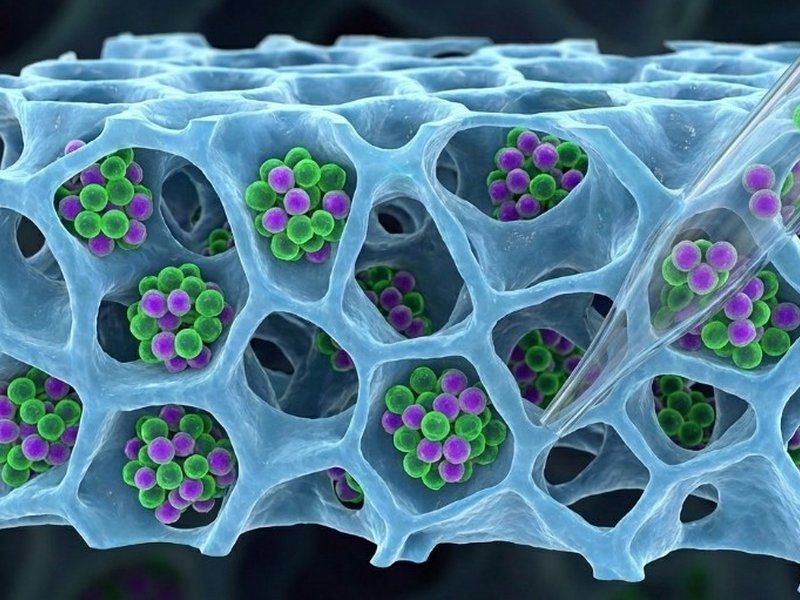
To address this challenge, Prof. Tayalia’s team focused on better mimicking the body’s natural environment using electrospun scaffolds. These scaffolds resemble thin mats made of extremely fine fibres, similar to a dense fishing net, and provide a more realistic structure for cells to grow.
The researchers grew Jurkat T-cells, a commonly used human T-cell line, inside electrospun scaffolds made from polycaprolactone, a biocompatible material. Under microscopic observation, the team found that the T-cells actively migrated into the scaffold and became firmly lodged between the fibres.
Also Read:https://skylinktimes.in/supreme-court-bans-stem-cell-therapy-for-autism/
Gentler Enzyme Improves Cell Survival
A key part of the study involved testing how different enzymes affected cell recovery. The researchers found that using trypsin, a commonly used enzyme, resulted in higher cell death.
In contrast, cells recovered using accutase, a milder enzyme, survived in significantly greater numbers. More importantly, these cells behaved more like healthy T-cells — forming clusters, an essential step before cell division, and continuing to grow well after recovery.
“Harsh treatments to cells, using enzymes such as trypsin, can damage key surface proteins needed for immune signalling and activation, reducing the cell’s therapeutic usefulness,” Prof. Tayalia explained. “Accutase appears mild enough to avoid this problem.”
Implications for Cancer Treatment
The findings, published in the scientific journal Biomaterials Science, could help laboratories adopt scaffold-based cell growth methods while ensuring higher-quality cell recovery. This improvement could enhance the reliability and success of therapies such as CAR T-cell treatment, which are increasingly being used to treat certain cancers.
“If we want these advanced therapies to reach patients, every step matters,” Prof. Tayalia said. “How we grow cells, and how we retrieve them, can make a real difference.”
For More Info Stay Tuned: https://skylinktimes.in