New Delhi, Sept 2, 2025| SKY LINK TIMES
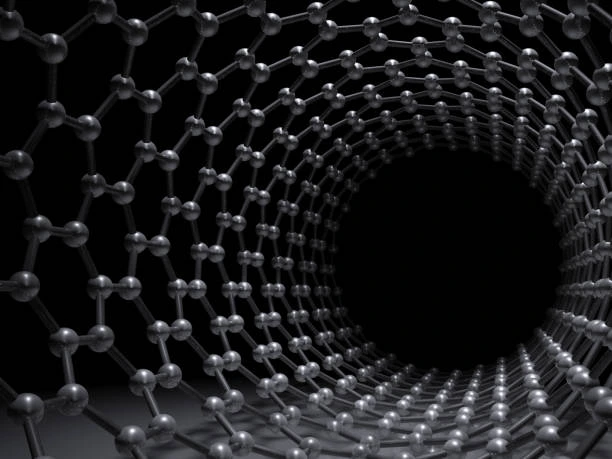
In a landmark achievement, scientists have developed a revolutionary Carbon Nanolattice Material using artificial intelligence (AI) that is as strong as steel but lighter than Styrofoam. This innovation could reshape industries such as aerospace, automotive, construction, and medicine, thanks to its extraordinary strength-to-weight ratio.
How AI Designed the Miracle Carbon Nanolattice Material
The breakthrough comes from researchers at the University of Toronto, working with Caltech and KAIST (Korea Advanced Institute of Science & Technology). They used machine learning algorithms to analyze millions of potential microscopic lattice structures, quickly identifying patterns that maximize both strength and lightness.
Instead of testing one design at a time, the AI system simulated countless possibilities—an approach that shaved decades off the traditional discovery process. The result was a carbon nanolattice, fabricated via nano-scale 3D printing (two-photon polymerization) and carbonized through heat treatment.
Stronger Than Titanium, Lighter Than Foam
Tests revealed that the AI-designed nanolattice is not only as strong as carbon steel but also up to five times stronger than titanium, all while being lighter than foam.
In fact, one prototype was shown to support more than a million times its own weight yet remains delicate enough to balance on a soap bubble.
ALSO READ : Semicon India 2025: First Made-in-India Processor Chip Presented (skylinktimes.in)
Potential Applications Across Industries
The applications of this breakthrough are vast and transformative:
- Aerospace: Replacing titanium components in aircraft could save up to 80 liters of fuel per kilogram per year, making air travel greener and more efficient.
- Automotive: Stronger yet lighter cars could boost fuel efficiency and safety.
- Construction: Ultra-strong lightweight materials could lead to safer, more sustainable buildings.
- Medical: Advanced implants and devices with enhanced durability and biocompatibility.
- Sports & Energy: From high-performance sports gear to lighter wind turbines, the possibilities are enormous.
AI as a Discovery Engine
This development underscores a bigger trend: AI is no longer just a tool for productivity—it is becoming a discovery engine. By enabling breakthroughs in material science, AI is helping humanity solve some of its toughest engineering challenges.
The future of technology may quite literally be built on materials imagined by AI.
Reference: Technology Networks, Popular Mechanics, ZME Science.
For More Info Stay Tuned: https://skylinktimes.in